
Millennials All Grown Up
A generation faces a brave new world

At last! This publication is back to the “thinking along the generational diagonal” series, which lets us understand how a generation got to where it is, by looking at where it came from.

I’ve been working my way down the age ladder of Americans in these posts. We’ve covered the old Boomers and the middle-aged Gen Xers, so now it’s time for America’s young adult generation.
Which would be the Millennials. They got their name from two generational theorists, William Strauss and Neil Howe, who bequeathed it to them back in the early 1990s1, based on the fact that they would be coming of age at the start of the new millennium.
When they first wrote about them, Strauss and Howe described Millennials as the beneficiaries of a newly protective style of parenting. Unlike the generation that came before them (Gen X), they were wanted children, and their parents sought to shelter them from the vagaries of the world. For example, a new kind of sign became ubiquitous on the backs of cars in the 1980s - both a declaration of pride and a warning to be mindful of the vehicle’s precious cargo.

Millennials were raised under a stricter regime than the generation that came before them, subject to more rules and surrounded by more boundaries. “Zero tolerance” policies punished transgressive behavior by children, and new child protection laws mandated safety protocols such as car seats and bike helmets. During the Millennial childhood era, laws and regulations that were enacted were often named after a child victim2, as though the public were drawing a line to say, “not one child more.”
In addition to being sheltered and protected in this way by their parents’ generation, Millennial kids were encouraged and pushed to achieve, as satirized in the scene below from the 1989 film Parenthood.
Sure, that scene is exaggerating for humor, and even provides a second kid as a counterexample, but it does hit the mark on how Boomers (yes, Steve Martin and Rick Moranis are both Baby Boomers) were expecting more from their children than had been the norm for the previous child generation.
As Millennials grew up, their more stringent upbringing, compared to that of the children that came before them, pushed them away from the individualism favored by previous generations and toward a more group-oriented way of thinking. Millennials endured more rigid dress codes than previous generations had, including an increase in mandated school uniforms. Education became more standardized, as well as more accommodating of special needs, in the interest of “leaving no child behind.”
Fostering uniformity and inclusiveness led to “participation trophies” and “teaching to the test,” generally seen as undesirable outcomes of the new obsession with raising up an entire generation of kids. More positively, Millennials as a whole reduced the rate of teen pregnancies, and the rates of substance abuse and crime by young people.3 They turned the reputation of youth around from deviancy to wholesomeness, despite what vestiges of trashy teen culture have remained for entertainment purposes.4
Millennials Adulting
Now that Millennials are all grown up, the very oldest of them already in their early forties, how has this generation fared, given how they were raised?
For one, they’ve certainly been recognized as a generation. The name coined by two theorists in the 90s, when the oldest Millennials were still preteens, has entered the common parlance. It shows up in pop culture: on television shows, acknowledging them as the up and coming young adults; on Internet memes, along with other generational names, highlighting their unique location in history. It’s not even a stretch to say that the attention paid to Millennials has normalized speaking in generational terms, even though there are differing definitions of what those generations are.
As they’ve aged into adulthood, Millennials have caught flak from older generations. Call it just another example of their peer trait of being pressured to succeed. They’ve been accused of being “snowflakes” when they’re not tough enough to take life’s knocks, or of being “entitled” when they have high expectations of being rewarded or compensated for their efforts. They’ve even been accused of “killing” this or that trend from the past, as if the current era’s changes in social conventions and economic habits were all on them.
Complaints about Millennials coming from their elders, which frankly can be mean-spirited, seem to be predicated on the idea that today’s young adults need to buck up and accept that life is hard and you just have to deal with it. But this misses a point that I already made when I introduced the concept of the generational diagonal: a cohort raised as children in a protective environment isn’t going to develop the same toughness that is endowed to a generation raised in an unprotective environment.5
A lot of how the Millennial experience has panned out in this era can be attributed to the fact that their generation had a sheltered childhood, where they were taught that the were special and were pushed to achieve, and then were tossed into an adult world of failing institutions that offer no shelter or protection, where achievement is next to impossible. This explains the challenge this generation has had “adulting” in the dismal reality of “late-stage capitalism.”
The adult world that Millennials inherited was already occupied by Boomers and Gen-Xers, and arranged to suit the more individualistic mindset of these older generations. Without the structure and guidance they were used to growing up, the young adult generation now feels unmoored. The difficulties they face with defining their own purpose and becoming self-sufficient is how, as one Millennial puts it, they became the “burnout generation.” But this burnout and withdrawal could simply be a rejection of the hyper-individualism of the past.6
Millennials were raised in a structured environment and guided toward their purpose, something beyond mere self-fulfillment. Now they are in an unstructured, free-for-all adult world where older leaders in politics and business no longer guide them, as if they could just become self-actualized like the Boomers and Gen Xers before them. With no help from their elders, they’ve taken it upon themselves, as a generation, to reshape society to suit their needs, according to the traits they acquired during their upbringing. That’s what the older generations are really complaining about!
Following the generational diagonal, we can trace throughlines from the traits Millennials developed in childhood to trends in today’s adult world.
Throughlines: Special, Sheltered
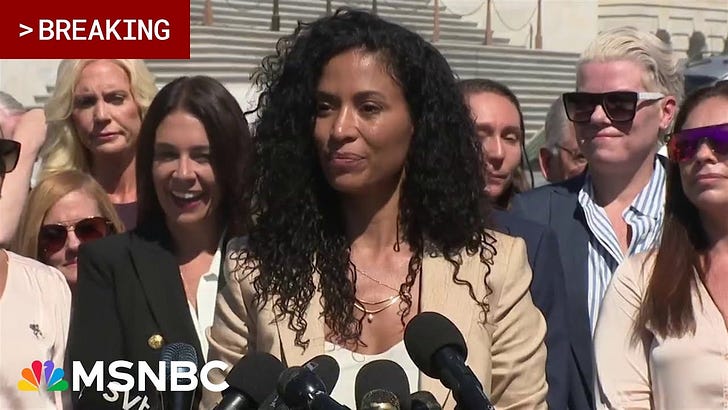
Millennials were taught that they were special and that they were deserving of protection. As they started entering the workforce, they made sure this principle applied to young women facing harassment. The #metoo movement swept through the workplace, ending the careers of many an old Boomer or Gen Xer who had risen in a more sexually permissive era. These executives became subject to the same zero tolerance that Millennials had dealt with growing up.
Millennial women were raised with high expectations; how could we ask them to accept abuse on the job?
The Black Lives Matter movement is the same principle applied to young black men, disproportionately the victims of police violence. It’s a crying shame that this needs to be a social movement at all, but it could be understood as a push for better outcomes for a new generation of youth.
The same can be said of other efforts to improve the lives of young adults, which have met varying degrees of political success. Examples include the settlement for concussion injuries that compelled the NFL to improve player safety, the so-called “Dreamer” act to provide a path to naturalization for children of undocumented immigrants, and attempts to forgive student loans, which burden young people trying to kickstart their careers.
Throughlines: Confident, Team-oriented
Millennials developed a group-oriented mentality in childhood, and their rise into young adulthood has coincided with the rise of the algorithmically-driven Internet feed, encouraging this habit. I’ve already covered how this generation uses social media to build consensus.

The growth of crowdsourcing online is another way a group-oriented approach to living is taking over. This can involve sharing information, resources, or even money. For Millennials, leveraging the group increases the value of participating in the market economy. The Millennial penchant for review sites makes this plain: they want as much info as possible from as large a user base as possible before making a consumer choice.
Millennials don’t review just consumer products online; they pretty much review everything under the sun, including you if you’re a professional offering services such as college education or healthcare. Millennials provide “Life Pro Tips” as general advice for living. They expound on a multitude of subjects in inventive new content formats such as the podcast or video essays.
A common kind of video essay produced by Millennials is the “counter argument” that dissects cultural phenomena, common sense knowledge or received history to get at hidden or unrepresented truth. These tend to be hyperrational, intent on revealing stark facts, repudiating the hysterics and oversaturation with meaning that characterize the Boomer outlook. It’s like Millennials seek to jettison all of the histrionic cultural baggage of the Boomer era, and rebuild a world based on reason and accuracy.
Here is a great example of what I mean:
Throughlines: Achieving, Pressured
According to Pew Research Center, “Millennials are on course to become the most educated generation in American history.” Not that this has necessarily helped them get jobs that make life affordable, especially considering the burden of student loan debt. The problem is that the pressure put on this generation to succeed has raised the demand for a college education, and consequently raised the price of tuition.7
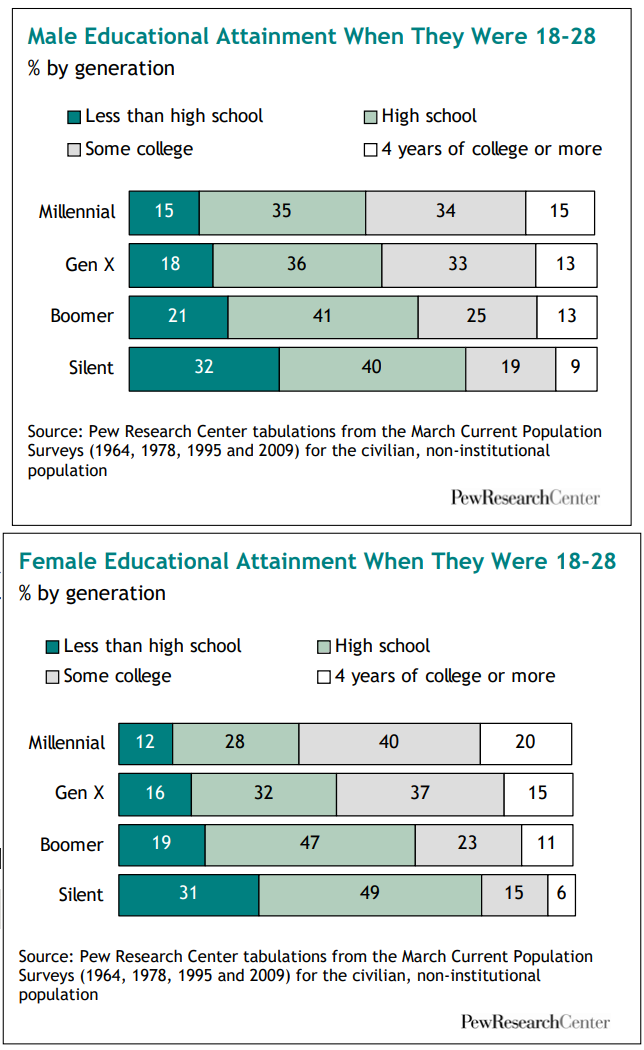
It’s also the case that Millennial women have seen proportionately greater gains compared to previous generations, and now dominate college enrollments.
As a whole Millennial women have been more successful than Millennial men, and may in fact be the most financially successful generation of American women ever. They are faring better than their male counterparts in today’s job market, and one of their hurdles in life is finding a partner who is a good match, given these disparities.
The Millennial gender gap could be attributed to the focus put on Millennial girls growing up. They were the “girl power” generation whose role models included female pop stars who celebrated their independence and their autonomy in relationships8.
This gender gap has had political ramifications, pushing young women toward the Democratic party and young men toward the Republican party.
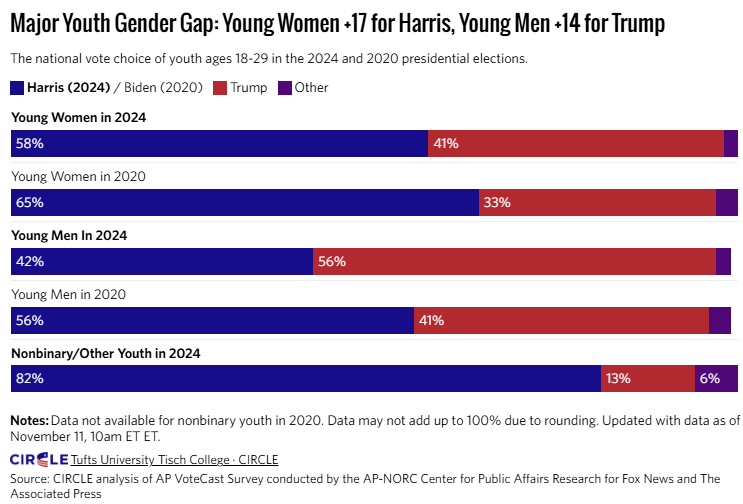
It’s understandable, given the difficulties young men face under the current “neoliberal” regime, and a troublesome indicator of the political need to address the obstacles Millennials face establishing families and careers.
Throughline: Conventional
One characteristic of the Millennial generation as a peer group is their desire to fit in, to be conventional. For all the angst about being too boring – or “basic” – there is this undercurrent of wanting to just be normal.
For example, there are subreddits for Millennials who are stuck on the fringes of society to fold themselves back into the conventional world. There’s one where children of anti-vaxxers can look for help. There’s another for Millennials who have escaped the outlier belief system of the Mormon church.
As for being basic, there’s a couple of hilarious satire videos that make fun of this idea, from the CollegeHumor channel. Here’s one for the girls: How To Tell if You're a Basic B*tch, and here’s one for the boys: How to Tell If You're a Basic Bro.
You can see in these videos what Millennials have done with customs which for previous generations were marks of rebellion, of a break from the bland culture of postwar America. Customs like yoga, astrology, and tattoos, which once defined the counterculture, have now been appropriated into the mainstream. And these videos make fun of them for being the new definition of bland and unimaginative - in other words, conventional.
There’s a contrast between being “basic” and being “bad” – that is, being regular versus standing out with an interesting persona. For the last generation which was similar to the Millennials – the Greatest Generation – being a regular guy or gal was something to be proud of. And I think that for Millennials, satire like these videos is cover for a heartfelt desire to just be basic – to enjoy acceptance without having to take the risks associated with trying to stand apart from your peers.
On the Brink of Midlife
I’ve been writing about the Millennial generation for a long time. In fact, a lot of what is in this article is recycled from my blog.
As already stated, the oldest Millennials are now in their early 40s, entering midlife, the peak years of any generation’s influence and power. They will surely continue to shape society in the ways that align with the throughlines covered above.
Meanwhile, they have to put up for now with the chaos of a world run by their elders. Political upheaval prevents solutions to the problems of affordability and justice that beset their lives - indeed, all our lives. Like the Greatest Generation during the 1930s Depression, in many ways Millennials’ lives are at a standstill, and they are only marking time.
They’ll find their cope in the generational community they have built, sharing their perspectives and establishing the expectations of what it means to be an American today.
See: Strauss, William., Howe, Neil. Generations: The History of America’s Future, 1584 to 2069. United Kingdom: HarperCollins, 1991 (ISBN 9780688119126)
Examples include Megan’s Law, which established a sex offender registry, and AMBER Alerts, which notify the public of a child abduction.
Especially compared to my generation, Generation X, infamously a wild bunch. Crime rates among youth peaked in the 1990s, when the last Gen Xers were in their teens, and have fallen ever since. The reduction in rates of socially deviant behavior has gotten to the point that today’s post-Millennial child generation is sometimes accused of not being deviant enough - of never having fun, not something anyone would have said about Gen X kids. But today’s child generation is a subject for a future post.
For a thorough look at the traits of Millennials in childhood, see: Howe, Neil., Strauss, William. Millennials Rising: The Next Great Generation. United States: Vintage, 2000 (ISBN 9780375707193).
I have used the traits they identified in the headers for my “throughlines” sections.
I highly recommend this memoir by a Millennial who grew up in disadvantaged circumstances, without the benefits of a sheltered environment: Netfield, Emi. Acceptance: A Memoir. United States: Penguin Publishing Group, 2022 (ISBN 9780593489475).
Netfield concludes that a traumatic childhood should not be tolerated as a means for someone to develop “grit” or “resilience” and emerge as a stronger person. Rather than give up on institutions of childrearing, as my generation likely would have done, she believes we should work to reform them. You can find her here on Substack.
There’s even an amusing term for a Millennial who, contrary to their peers, does embrace the ways of older generations. They are called a “30-Year-Old Boomer.”
Don’t worry, lowered fertility rates mean there will be fewer young people in the future, so this problem will take care of itself.
The Millennial apotheosis being, of course, Taylor Swift.